About
How the RAS would benefit New Zealanders.
Rates, a home energy upgrade and a development contribution all share one problem: a big bill that lands upfront. The Ratepayer Assistance Scheme is a well-developed proposal to turn those bills into affordable payments spread over time, using the credit strength councils already have.

The problem
Three big bills that land all at once.
The rates rebate covered about 60% of average rates in 1973. It covers about 20% now. Solar and heat pumps pay for themselves, but the upfront cost stops most households. Development contributions fall due before a home is built.
Seniors on NZ Super and families on tight budgets feel every rates rise, and the only product on the market that lets them unlock the value of their home, a reverse mortgage, costs around 8%.
Bank green loans run for three to five years and need a mortgage. Rewiring Aotearoa says four out of five households cannot access one.
Development contributions of $30,000 to $60,000 or more per dwelling fall due before a home is built, which stalls the small developments, infill and granny flats that councils want.
Sources: RAS overview, November 2025; Rewiring Aotearoa, The case for energy loans, December 2025; RNZ, 8 July 2026.
The inspiration
The LGFA, applied to ratepayers.
The RAS builds on the success of the New Zealand Local Government Funding Agency, the council-owned agency that borrows cheaply on behalf of councils. The RAS would apply the same model to ratepayers: a central and local government-owned lender with a very high credit rating, raising money at scale and passing the low cost on.
Councils already have the power to postpone rates and to lend for property improvements. The RAS describes itself as an extension and activation of those existing powers, but significantly more efficient, nationally consistent, and off every balance sheet.
Overseas, British Columbia's Property Tax Deferment scheme shows what happens when postponement is easy and cheap: more than 83,000 users and about C$2.7 billion in loans in 2024, quadrupled since 2016.
Sources: RAS overview, November 2025; QLDC briefing pack, June 2025.
At scale
What the business case says.
2025 base case figures from the RAS overview and the February 2026 council deck. Indicative until the scheme is established.
Loans in the first 15 years
Across all three products
Lending capacity after 15 years
NZ Herald, 9 March 2026; RAS overview
Extra solar installs in 15 years
80% more than all current installs in NZ
Breakeven, with equity repaid by year 8 to 10
About $7m a year operating cost; assumes 60% of councils join on day one
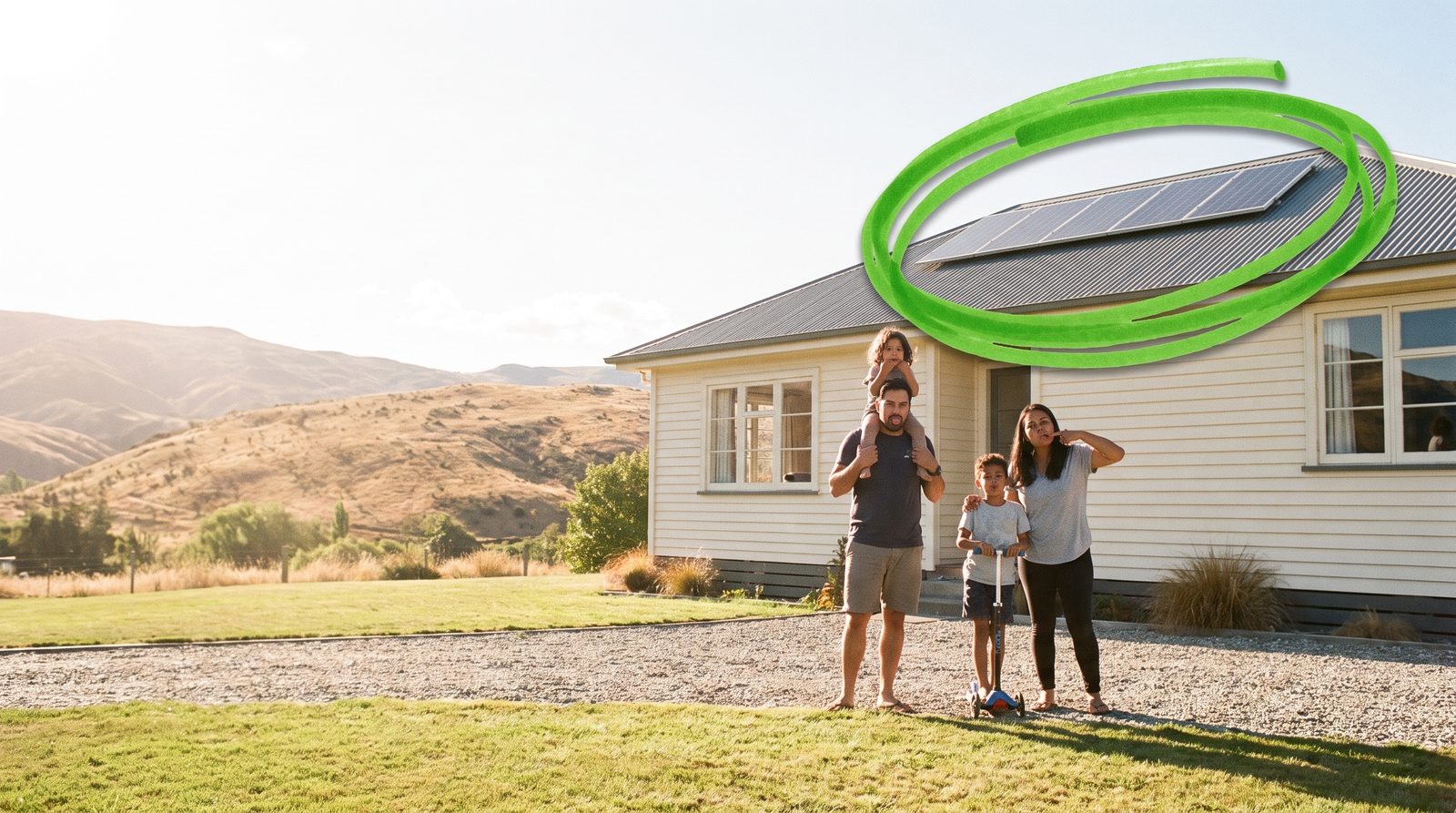
Cheaper to borrow. Easier to stay. More homes built.
Who is involved
Built by the sector, for the sector.
Led by Local Government New Zealand with the LGFA and lead adviser Cameron Partners. Rewiring Aotearoa and EECA are supporting partners. Eight councils funded the 2025 business case and an independent Strategic Advisory Group endorsed it.
 People and partners
 How it works
 Where it is at
 Find your council