For you
Build now, pay development contributions over time.
Councils would still get paid upfront. Developers and future owners repay the contribution over up to 30 years, so more homes get built and fewer get stuck at consent.

Is this for you?
Four things that need to be true.
Tick these off. If all four are true, this product is designed for you. Eligibility is from the RAS overview, November 2025; final rules will be set in the term sheet.

You are building one or more dwellings and have been invoiced a development contribution.
Your council has opted in to Deferred DCs (none can yet, as the RAS is a proposal).
You have at least 20% equity in the property.
You are comfortable with a RAS levy staying on the title until it is cleared.
Worked examples
Two illustrative households.
These people are made up. The numbers are calculated from the assumptions shown, using the same formulas as our calculators. Items marked placeholder are waiting on confirmed figures.
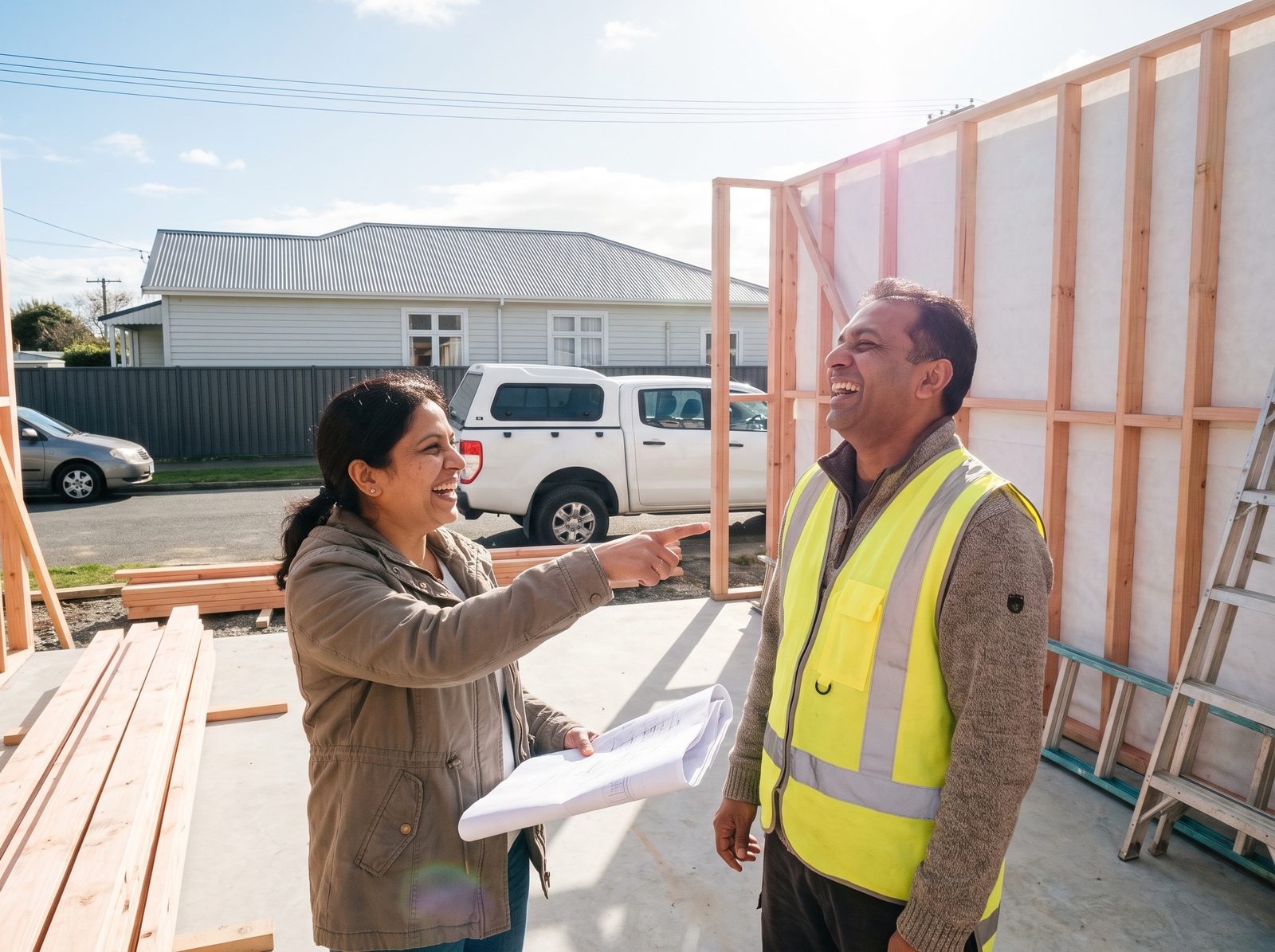
Kiri, Queenstown Lakes
Small developer, three townhouses, sells two years after consent
- DC per dwelling
- $45,000 (midpoint of $30 to 60k, placeholder)
- Dwellings
- 3
- Deferral term
- 30 years
- RAS rate
- 3.65% (indicative)
- Her cost of capital
- 10%
Each dwelling carries an annual RAS levy of about $2,493. When she sells after two years the balance per dwelling is about $43,268, which the buyer can ask her to clear or take on with the property. Not borrowing $45,000 per dwelling at 10% for two years saves her about $6,105 per dwelling.
Change the numbersThe Patels, Auckland
Family building a granny flat for their parents, keeping it long term
- DC per dwelling
- $45,000 (placeholder)
- Dwellings
- 1
- Deferral term
- 30 years
- RAS rate
- 3.65% (indicative)
Auckland estimates half its DC revenue comes from developments of fewer than four houses. Over 30 years the family pays about $74,787 in total, of which $29,787 is interest.
Change the numbersWhat it costs
Cheap and long, but still a loan.
Interest is floating, reset quarterly, around 2% below bank floating mortgage rates. The fee is about $100, once. Early repayment is allowed at any time with no penalty. All indicative.

What to watch out for
- The levy sits against the property. Potential buyers will be fully aware of it, and may ask you to clear it at settlement.
- Interest compounds over 30 years. Our calculator shows the balance at the point you expect to sell.
- The replacement development levy regime is still being legislated. Terms for levies may differ from DCs.
- Minimum project size and any thresholds are not yet published.
RAS overview, November 2025; LGNZ FAQ.
See your own numbers
Build now. Pay as you go.
Where it is available
Councils engaged so far.
No council is live yet, as the RAS is a proposed scheme. These councils have funded, supported or been briefed on the RAS. Not on the list? Here is how to ask your council.
Common questions
Things people ask.
More on the FAQ page.
Does the council lose money?
No. The RAS would pay the council the full contribution upfront. The council's balance sheet is unchanged.
Who repays if I sell the house?
The buyer can require you to clear the levy at settlement, or take the property with the levy and pay less for it.
Is this only for big developers?
No. It is explicitly designed for mum and dad developers and granny flats. Auckland says half its DC revenue comes from developments of fewer than four houses.
What about development levies?
Government is replacing DCs with development levies. LGNZ expects the RAS to finance those too, but details are not yet published.